
May 26, 2026
by Dr Jacqueline Service
Paragraph or two that will display next to image
See, I am doing a new thing!
Now it springs up; do you not perceive it?
I am making a way in the wilderness
and streams in the wasteland.
—Isaiah 43:19
When something is about to happen, we often sense it before we see it. There is a rumbling, an undercurrent, a shift — however slight. At such moments, we can retreat to slumber or awaken to anticipation.
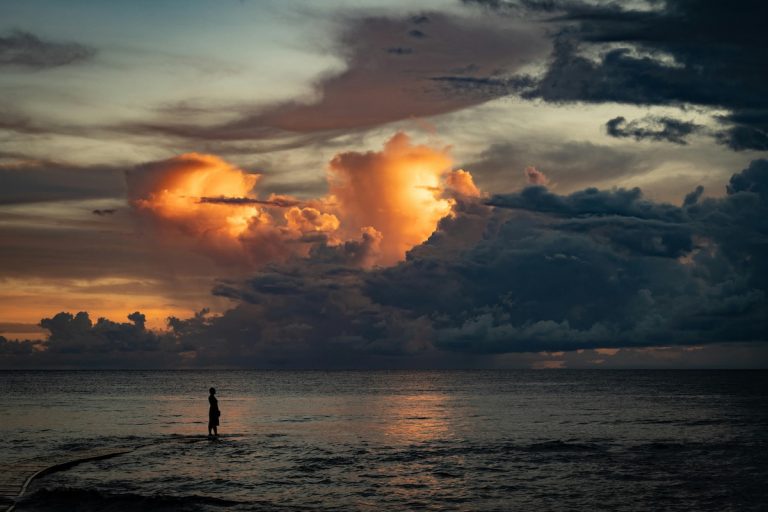
We see something of this in the prophet Elijah as he waited and prayed with expectation for the promised rain, all the while the sky remained cloudless. Rather than allowing the dry sky to induce doubt, he rightly understood it, in the providence of God, as a sky pregnant with possibility. Seven times he attended to the horizon of that silent sky.
“And then … a small cloud appeared” (1 Kings 18:41–46).
The first two chapters of the book of Acts place us similarly alongside the disciples, who find themselves suspended between
promise,
expectation, and
arrival.
Following His resurrection, Jesus urges the disciples to wait in Jerusalem to receive the Holy Spirit (Acts 1:4–5).
He anchors them in promise.
He awakens them with expectation.
And then … the unexpected. He departs. “Taken up … a cloud took Him out of their sight” (Acts 1:10).
At this moment, theology usually sweeps in to cast our thinking toward the wonders of Jesus’ ascension. Indeed, the church calendar recently celebrated Ascension Day (21 May), rightly lifting our contemplation to the majesty of Jesus ascending to Heaven to be enthroned with the Father, seated on high as the Lord of the cosmos — “he … ascended higher than all the heavens, so that he might fill the whole universe” (Eph 4:10).
Ascension declares the new reality that Jesus reigns over all places and dimensions — from the depths of the underworld to the heights of heaven.
There is no place over which he does not reign.
Ascension likewise declares the exaltation of humanity; those who, through faith in Christ, are lifted into the place of the ‘new Adam’ — the place of life, victory, and communion.
Swiss-German theologian Karl Barth expresses this wonder vividly as he connects the Son of God’s descent to assume a human nature (incarnation) with his ascent as Son of Man (ascension):
As the Son of God he goes into the far country. As the Son of Man he returns home. And what he brings with him—we might almost say as the spoils of the divine mercy—from that far country, what He places in the closest proximity to God from the greatest distance, is the human essence assumed by Him. (Barth, Church Dogmatics, IV/1 p.103)
Such marvels!
And yet, the disciples are left staring into an empty sky.
But what kind of sky is this? One that induces doubt? A sky that, after promise and expectation, now seems marked only by departure and absence?
Or are the disciples now staring at a sky that reveals the sacred pattern that precedes the promise?
Their response reveals the answer.
They obey the command of Christ and wait in Jerusalem.
Their sky is not empty.
The air is poised with promise.
The disciples are primed with expectation.
The new is springing up, and they wait to hasten its arrival.
But what about us?
Have we pushed aside God’s promise — extinguished expectation — as we stare into our empty sky?
Or are we those who understand that even vacant voids reside under the reign of the ascended Christ and are thresholds of unfolding promise?
—“See, I am doing a new thing!
Now it springs up; do you not perceive it?